
Navigation
Analysis of Common Causes of Fastener Bolt Fracture
There are various causes for the fracture of fastener bolts. In summary, bolt damage generally results from stress factors, fatigue, corrosion, hydrogen embrittlement, and other contributing factors.
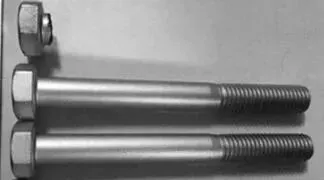
1. Bolt Fracture
1.1 Stress Factors
Exceeding normal stress (overstress) arises from any one or a combination of shear, tension, bending, and compression.
Most designers first consider the combined effect of tensile load, preload (clamp force), and applied service loads. The preload is essentially internal and static; it compresses the joint components. The service load is external and generally cyclical (repetitive) force applied to the fastener.
Tensile loads attempt to pull the joint members apart. When these loads exceed the yield strength of the bolt, the bolt transitions from elastic deformation into the plastic region, resulting in permanent deformation, so that it cannot recover its original state after the external load is removed. Similarly, if the external load on the bolt exceeds its ultimate tensile strength, the bolt will fracture.
Bolts are tightened by torque that generates preload. During installation, excessive torque leads to overtightening, which simultaneously overstresses the fastener and reduces its axial tensile strength. In other words, a bolt subjected to continuous torsional stress has a lower yield value than the same bolt subjected to direct tensile loading. Consequently, the bolt may yield before reaching the minimum tensile strength specified by the relevant standard. High torque increases the preload and correspondingly reduces joint loosening. To maximize locking force, preload is usually set near the upper limit. Therefore, unless the margin between yield strength and ultimate tensile strength is very small, bolts generally do not yield due to torsion alone.
Shear loads apply a force perpendicular to the longitudinal axis of the bolt. Shear stress is classified as single shear or double shear. From empirical data, the ultimate single shear stress is approximately 65% of the ultimate tensile stress. Many designers prefer shear loaded joints because they utilise both the tensile and shear strengths of the bolt; the bolt acts primarily as a pin, creating a relatively simple connection for the sheared fastener. The disadvantages are that shear connections have limited applications and cannot be used frequently, as they require more material and space. We know that material composition and precision also play a decisive role. However, material data for converting tensile stress into shear load capacity is often unavailable.
The fastener preload affects the integrity of the shear joint. The lower the preload, the more easily the joint layers can slide relative to each other when in contact with the bolt. Shear load capacity is calculated by multiplying the number of transverse planes (one plane is called single shear, two planes double shear); these planes should be the cross sectional area of the unthreaded shank of the bolt. We do not recommend designing shear through the threads, because the shear strength of the fastener may be compromised by stress concentration where the cross section changes. When determining the shear strength of a fastener, some designers use the tensile stress area, while others prefer the minor diameter section. If the bolt in a shear joint is torqued to the specified value (as shown in Figure 2), sliding between the mating faces of the joint layers cannot begin until the external force exceeds the friction resistance. Increasing the friction between mating surfaces improves the overall integrity of the joint. Sometimes, due to component size or design requirements, the number of bolts that can be used is limited.
There are various causes for the fracture of fastener bolts. In summary, bolt damage generally results from stress factors, fatigue, corrosion, hydrogen embrittlement, and other contributing factors.
1. Bolt Fracture
1.1 Stress Factors
Exceeding normal stress (overstress) arises from any one or a combination of shear, tension, bending, and compression.
Most designers first consider the combined effect of tensile load, preload (clamp force), and applied service loads. The preload is essentially internal and static; it compresses the joint components. The service load is external and generally cyclical (repetitive) force applied to the fastener.
Tensile loads attempt to pull the joint members apart. When these loads exceed the yield strength of the bolt, the bolt transitions from elastic deformation into the plastic region, resulting in permanent deformation, so that it cannot recover its original state after the external load is removed. Similarly, if the external load on the bolt exceeds its ultimate tensile strength, the bolt will fracture.
Bolts are tightened by torque that generates preload. During installation, excessive torque leads to overtightening, which simultaneously overstresses the fastener and reduces its axial tensile strength. In other words, a bolt subjected to continuous torsional stress has a lower yield value than the same bolt subjected to direct tensile loading. Consequently, the bolt may yield before reaching the minimum tensile strength specified by the relevant standard. High torque increases the preload and correspondingly reduces joint loosening. To maximize locking force, preload is usually set near the upper limit. Therefore, unless the margin between yield strength and ultimate tensile strength is very small, bolts generally do not yield due to torsion alone.
Shear loads apply a force perpendicular to the longitudinal axis of the bolt. Shear stress is classified as single shear or double shear. From empirical data, the ultimate single shear stress is approximately 65% of the ultimate tensile stress. Many designers prefer shear loaded joints because they utilise both the tensile and shear strengths of the bolt; the bolt acts primarily as a pin, creating a relatively simple connection for the sheared fastener. The disadvantages are that shear connections have limited applications and cannot be used frequently, as they require more material and space. We know that material composition and precision also play a decisive role. However, material data for converting tensile stress into shear load capacity is often unavailable.
The fastener preload affects the integrity of the shear joint. The lower the preload, the more easily the joint layers can slide relative to each other when in contact with the bolt. Shear load capacity is calculated by multiplying the number of transverse planes (one plane is called single shear, two planes double shear); these planes should be the cross sectional area of the unthreaded shank of the bolt. We do not recommend designing shear through the threads, because the shear strength of the fastener may be compromised by stress concentration where the cross section changes. When determining the shear strength of a fastener, some designers use the tensile stress area, while others prefer the minor diameter section. If the bolt in a shear joint is torqued to the specified value (as shown in Figure 2), sliding between the mating faces of the joint layers cannot begin until the external force exceeds the friction resistance. Increasing the friction between mating surfaces improves the overall integrity of the joint. Sometimes, due to component size or design requirements, the number of bolts that can be used is limited.